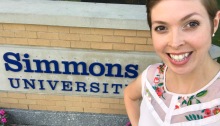
Next Up: Three Months of TechStars Awesome Sauce

28 Mar

Erica Swallow at TechStars NYC

Over the weekend, I had full intentions to leave New York this Sunday for a two-week trip to Utah, where I’d shadow winemaker Danny Bull at Montezuma Canyon Ranch and Vineyards to learn how to plant grapevines and make organic wine — as some of you know, I’ve been on a personal winemaking journey for the past few years, following one of my life goals of starting Swallow Winery.

And my plan for the full month of May was to knock out tons of work while sipping mimosas beachside on some gorgeous beach I had yet to choose.

All of that changed on Sunday night, though, when Lexi Lewtan, a friend and colleagued email introduced me to Eugene Chung, the new managing director of TechStars NYC, previously of NEA fame and currently also wearing VC and indie filmmaker hats — quite honestly I took the meeting because I love TechStars and Eugene’s background sounded oddly intriguing.

I took a Monday afternoon meeting, thinking I’d go in, hear about a really cool position, but ultimately decline, because I had to get back to my massive vineyard and beach travels. But I was in for the surprise of the year — for the first time in my life, I decided to take an unpaid position, merely because it sounded like the best use of my summer and the team I’d be working with sounded like a rockstar combo.

For the next three months, I’ll be working 70-80 hour weeks, missing out on a gazillion coffee dates, annoying all of my friends with party declines, and frankly, having the experience of a lifetime. I can honestly say there’s nothing else I’d rather be doing right now. Ok, except maybe having infinite amounts of cookies delivered to the office to share with my newfound team. But hey, my $5 per day budget isn’t going to allow for that. Trade offs.

I’m stoked to have the opportunity to help the next group of amazing startups build awesome digital media and press strategies as one of six baller TechStar NYC Associates, working alongside Eugene and Program Manager KJ Singh.

So, friends and family, believe me when I say I love you and for the next three months, I’m going to miss seeing your beautiful faces. Please don’t hate me if I don’t answer your phone calls, only respond to your text messages after midnight, and miss everything you invite me to this summer. Just know that I’m only following my passions, and I’m thinking about you all every moment of the way. At the end of this, you’re going to get to spend time with an improved version of me — one that probably spent the past few months sleeping under desks and on couches, meeting epic people and seeing amazing products built right before her eyes.

For you and for me, this is a long-term investment for a better me and a better world. Let’s do this!

A Selection of Startup Pitches With Flair

21 Jan

In my Startup PR courses on Skillshare and Udemy, I advocate using the Founder Institute’s recipe for the perfect one-sentence startup pitch (see video above), as pitching and messaging are usually issues for entrepreneurs or startup employees who may be more focused on product development, user acquisition, or a boat load of other tasks.

I’ve read some great startup pitches and some not-so-lovely pitches as well. It’s always a pleasure to work with startups eager to craft better pitches.

In January, I taught an online Skillshare class called “Getting Press on a Tight Budget.” After taking the course, students were asked to create press kits for their startups, making sure to include — at the very least — a one-sentence startup pitch and an email pitch written to me, a tech journalist. Below you’ll find some of the best pitches submitted, and in case you’re curious, you can find all of the projects on the class page.


One-Sentence Pitches


Let’s start with one-sentence pitches, the elevator pitch of email. Here are a few that stood out from the crowd:

  • Web Academy of Music is a video-based online music school that offers private lessons through video exchange to help busy people learn an instrument.
  • Meet Your Makers is developing a series of weekly markets and an accompanying website to help small creative businesses who engage in sustainable practices to gain main-stream exposure and increase direct sales.
  • UrbanSake.com offers a full service sake appreciation program that will help anyone discover and more fully enjoy Japanese sake using unique and fun in person and online sake tasting seminars.
  • Mewe is the first comparison site that helps purpose driven travelers find, book & rate their perfect voluntourism package and also enables them to crowdfund their selected cause.

These pitches are crisp and easy-to-understand — way better than the usual mumbo jumbo that reaches my inbox. And, I must say, Mewe accompanied its pitch with a delightful product video that showcased the team is serious and has a brilliant product idea. Furthermore, I’d recommend checking out UrbanSake’s email pitch, as founder Timothy Sullivan really understands the art of the personalized pitch.


Email Pitches


Check out the wrap-up and feedback session for my Skillshare class, which features the best one-sentence pitches and email pitches with in-depth reasoning behind their awesomeness.

When it comes to choosing the best email pitches from the course, I’d say UrbanSake and Mewe did a great job.

There were, however, two email pitches that caught my eye, and for two separate reasons:

  • Leaves of Trees, an all-natural skin care company, submitted an email pitch, that while a bit jargon-y at times, was well-targeted towards a writer who cared a lot about all-natural products (me). Though I don’t cover skin care, I appreciated the detail put into explaining just how special the process was. Furthermore, this email included beautiful product pictures, including a lip balm close-up, which amazingly, I’ve been looking for a new brand of all-natural lip balm. It’s like they knew!
  • Just BE Cause” is a “book anthology that features Ah-ha moments that inspire the next generation of change makers,” written by social entrepreneur Syreeta Gates. I was charmed by Syreeta’s pitch, because she showed true passion, included endorsements from recognizable leaders in education and entrepreneurship, and seemed to have a purpose behind her work. She made a few missteps, which I pointed out in the comments of her project. But, otherwise, I would read the book in a heartbeat.

Last, but not least, I can’t forget the most thorough press kit submitted — the Skillshare press kit, submitted by Skillshare’s awesome community manager, Danya Cheskis-Gold. Of course, I couldn’t choose Skillshare as the top project submitter in a Skillshare class! But, I wanted to give a shout-out, since this kit has everything a journalist could need: FAQs, class examples, logos, team bios, photos, videos, screenshots, demos, press clips, thought-leadership articles. It’s quite amazing and is a perfect example for the startup that wants to go all out on its press kit!

If you’re still craving press kits and email pitches, head on over to the Projects tab on my Skillshare class for all the pitches you could care for. Hours of fun and learning, guaranteed. Cheers!

Announcing My Udemy Course on Startup PR!

19 Nov

Quiet on the set! My Udemy course was filmed at Contently HQ. Notice that we hadn’t quite filled our bookshelves yet, so I had to do some maneuvering to make the shot work!
(Image courtesy of videographer Jay Irani)

I’m excited to announce the launch of my Udemy course, “Startup PR: Getting Press on a Shoestring Budget.”

After two years or writing and teaching about startup PR, it’s about time I get my act together and put together a full-on course, right?!

The 13-lecture course comes in at a little more than two hours of content and focuses on:

  • how to build relationships with journalists
  • the secrets to crafting an awesome email pitch
  • ideas for communicating more effectively

In celebration of the course’s launch, I’m offering up a limited time offer for the first 100 readers to enroll! Use the coupon code lovelyreader for a 50% discount on the original price. Not too shabby, right?!

I’m looking forward to seeing how this goes, so don’t hesitate to holla back! And thank you in advance for your support and feedback!

What are you waiting for? Take my course now!

Special thanks to my buddy Jay Irani for the awesome camera work! You’re the man, Jay!

Comparing Obama and Romney’s Schooling Years

2 Nov

Education plays a big role in my life. I grew up in Arkansas, my family bobbing above and below the poverty line throughout my childhood — from a very early age, I knew that education was going to be the determining factor of my success in life.

I studied hard, took Advanced Placement courses in high school, attended America’s “dream school,” and am now in the process of applying for graduate school.

Education has made all the difference in my life. I am the first person in my family to graduate from college, and at 26 years old, I’ve accomplished a lot more with the cards the world dealt me than would have seemed possible.

Though education has been a central pillar in my life, I had never thought to take a look at the educational backgrounds of the world’s top leaders and compare them to my own schooling. Until now, I found it presumable that most of America’s presidents probably attended elite colleges and graduate programs, but I hadn’t thought about the full picture, beyond secondary school.

That all changed this week, though, when I came across the below infographic that takes a look at the educational backgrounds of presidential candidates Barack Obama and Mitt Romney. While I shouldn’t have been surprised to see that both candidates attended elite elementary schools, I couldn’t help but to be taken back a bit.

Yes, education is important. But when does the choice of attending a particular school over others start to become pivotal in a person’s success trajectory? Pre-school? Kindergarten? Middle school? High school? College? Or is a person’s success determined by many other factors beyond their schooling, such as his or her will to succeed and break molds?

I’m sure this question and others that I’ve been pondering as a result of this infographic are ripe for debate, and there’s no doubt that America’s education system still has a long way to go before every student is served well from the day they enter school until the day they graduate.

I’m not really going to get into all of those discussions, though. I merely wanted to share this infographic with you, which looks at the entirety of Obama and Romney’s schooling. Very interesting read. If you have any thoughts to add, please do comment below!

Enjoy, and feel free to enlarge the infographic by clicking here or on the image.

Image courtesy of Cain and Todd Benson and infographic courtesy of Degree Jungle

Staycations: How Americans Spend Their Summers

9 Aug

Two-thirds of Americans have taken a “staycation,” according to a recent LivingSocial survey. With the average vacation cost weighing in at a whopping $1,180 per person, it’s no wonder!

As if it weren’t sad enough that Americans only get an average of 14 vacation days per year — an international low — more than half of Americans say that increased gas prices affect their summer travel plans. Oy, come on, America.

Let’s take a look at the world of staycations with the below infographic created by timeRAZOR.

I’d have to give a thumbs up to everything except that staycations are “still a favorite way for Americans to spend their summer.” Based on the data, it kind of looks like we’re just forced into staying home, with no vacation days and too many expenses. Please, someone, let us out of here!

The State of the Wine Industry [INFOGRAPHIC]

17 Apr

Fine wine sales in the United States are forecasted to increase by 7-11% this year, according to Silicon Valley Bank’s Annual State of the Wine Industry Report, released on Tuesday.

Along with increased demand, the report’s author, Rob McMillan, projects increased grape and bulk juice prices, fewer private labels, more variation and acreage in plantings, a decline in wine quality for the price paid, and an increase in market share for imported wines.

The report also addresses the emergence of the “Fifth Column,” a group of “disparate, focused companies” that are challenging how wine is distributed, enabling it to be sold direct to consumers, cutting out the wholesaler. Some of those companies include the likes of ShipCompliant, TastingRoom.com, Lot18, VinTank and Naked Wines — believe me, that’s only the beginning.

The report was released in conjunction with a nifty infographic (pictured below) that sums up the institution’s findings.

To dig into the report, download it here, or check out this presentation on SlideShare, which is chock-full of graphs and numbers to get your head spinning.

What are your thoughts on the findings? Any you’d add to the mix based on personal observations?

Image by Erica Swallow

How to Get Consumers Addicted to Your Content

11 Apr


Tara-Nicholle Nelson, vice president of digital and content at SutherlandGold Group, presenting at SXSW 2012

This post originally appeared on NASDAQ’s blog, where I contributed articles about content strategy during SXSW 2012.

Addiction is not a subject usually pegged to positive meaning – we usually speak about addition in reference to physical or psychological dependencies on a substance, person or object.

But addiction can have a positive meaning, too. Some of us get our fix with coffee; we all know someone addicted to Angry Birds, FarmVille or Words with Friends; and there are already some Pinterest nuts popping up all over the web.

There’s a synonym for these types of addictions, says Tara-Nicholle Nelson, vice president of digital and content at SutherlandGold Group, and that word is “love.”

For content addicts, this love is usually expressed by frequenting a small group of sites on a regular basis. Just think – are there any sites that you visit on a daily basis? What exactly is it about those sites that keeps you coming back?

Nelson says that brand publishers must understand what motivates consumers to consistently return to content sites, and then take those learnings to heart. Only then, will brands learn how to create addictive content.

Every brand goes through a process to becoming a brand that is loved by its consumers. That process entails reach, trial and stick. Once a brand has reached out to a consumer, that consumer must then try it out. If these two stages go as planned and the consumer keeps coming back for more, the brand has achieved “stick.”

There are three steps to generating “stickiness,” says Nelson, and some brands are already doing a great job at it.

1. Don’t Publish Information. Fuel Aspirations.

Brands must understand what their customers want to keep them happy. People want change more than ever, says Nelson. We want to be smarter, live cleaner, be more passionate, eat better foods, be more frugal. And we are more committed than ever to achieving our goals and dreams, she says.

To achieve our goals, we want knowledge. Brands can help us make our goal achievement smoother to achieve our aspirations, she says.

There is an opportunity, then, for brands to help consumers visualize, track and reach their goals. This can be as simple as creating content – how-tos, for example – to help consumers get what they want.

Or it can be as complicated as creating new products that help users track progress towards their goals. Products like Mint (personal finance tracking), Chartbeat (real-time blogging analytics) and The Eatery (healthful eating visualization) all do this.

2. Market Your Manifesto.

Brands should create manifestos that transcend the utility that the brand provides – they should take on topics that are bigger than their brands or the verticals that they work in, says Nelson.

Lululemon’s manifesto, for example, is all about a way of life that that has very little to do with yoga and exercise, its core areas of business. Instead, it’s all about life, love, relationships, health. Here’s an excerpt:

“Do one thing a day that scares you… Stress is related to 99% of all illness… Dance, sing, floss and travel… Sweat once a day to regenerate your skin… The pursuit of happiness is the source of all unhappiness.”

Your manifesto may even become an integral part of your company’s revenue. Sound silly? Think again. Design company Holstee began offering up prints of its company manifesto (as pictured above) last year. The message went viral, and so far, the manifesto has been viewed online more than 50 million times and print sales accounted for 50% of the business’s revenue.

3. Double-down on Content Experiences.

Keep in mind that a consumer’s experience with your brand doesn’t end with a tweet or a visit to your website. Whenever possible, couple content with real experiences.

Lululemon, for example, hosts free yoga events in its store and even puts on an annual worldwide Salutation Nation yoga gathering, where yogis from all around the world gather at 9 a.m. their time to practice yoga together. Not only is Lululemon helping yogis improve their practices during the event, but it posts videos and pictures online afterwards for attendees to enjoy.

Likewise, a number of subscription-based mail services are cropping up, including poster child, Birchbox, a beauty-samples-by-mail company. Birchbox creates a content experience around the arrival of its latest beauty sampling in the mail. The Birchbox team creates video tutorials and how-to posts on how to best use the samples. And users even post their own reviews and how-tos across the Internet.

Birchbox also maintains a lifestyle-oriented blog and social media presence that follow topics that appeal to its audience. For example, the team put together a SXSW packing list chronicling the must-have items that they’d be bringing to the conference – great packing tips for fellow attendees.

Nelson’s tips are a great start towards creating a brand and content that people love. What are your tips for creating addicting content?

Follow

Get every new post delivered to your Inbox.

Join 124 other followers

%d bloggers like this: